If I could only grow a handful of herbs, comfrey would definitely make the list.
I first learned about comfrey years ago from a colon therapist I worked with in Utah. Later, I discovered that it was also known as “knit bone” and was a key herb in many of Dr. Christopher’s formulas. Since then, it has continued to show up in my life in surprising ways.
Over the years, I’ve used comfrey in smoothies, herbal salves, the garden, and even as animal feed. It’s one of those plants that seems to have an endless list of uses.

There are two main types of comfrey. Common comfrey spreads by seed and can take over an area if you’re not careful. Russian comfrey is a sterile hybrid that doesn’t spread by seed and is often preferred by gardeners. In France, wild comfrey grew right in our yard, and I loved harvesting the leaves and flowers each spring.
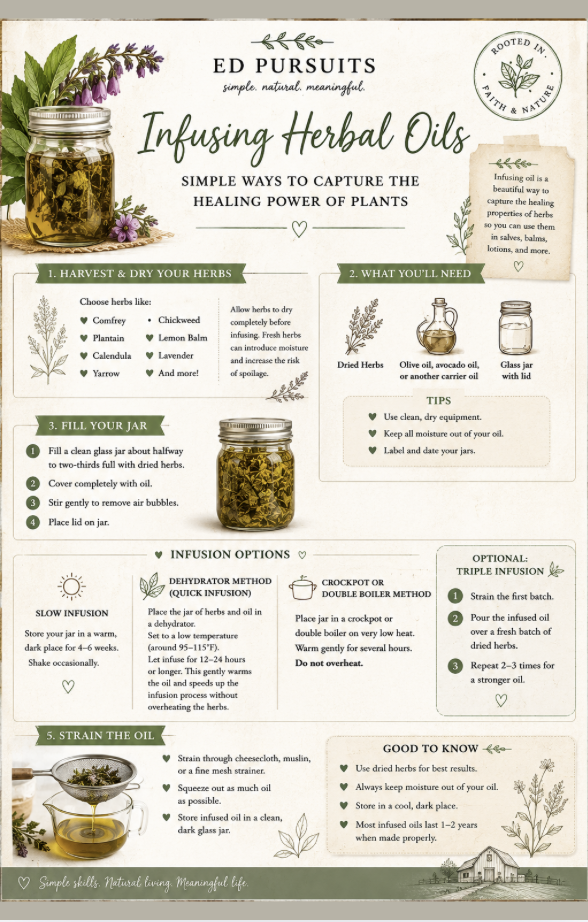
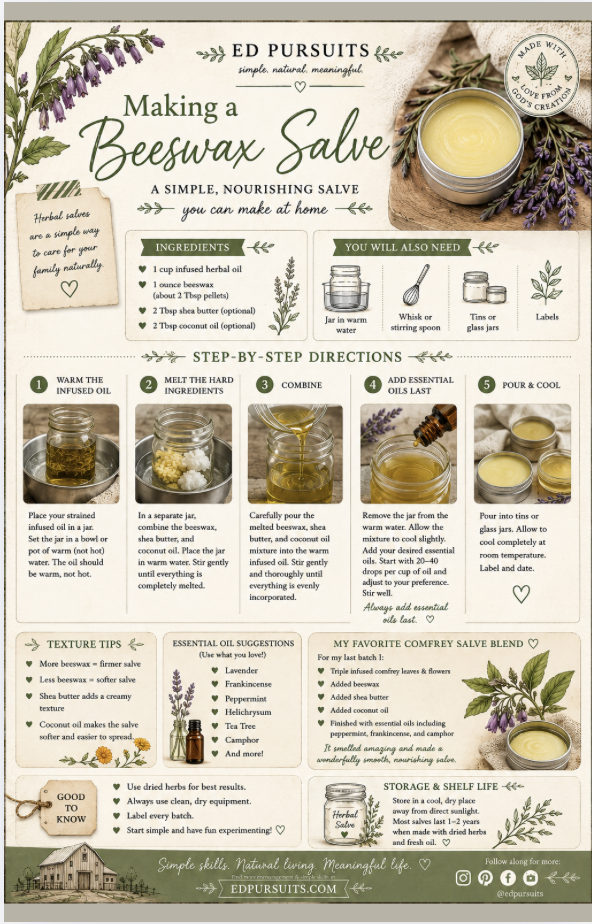
One of my favorite ways to use comfrey is in homemade salves. I dry the leaves and flowers, infuse them into oil, and then turn that oil into a simple beeswax salve. Recently I learned about a triple-infusion method, where the same oil is infused with multiple batches of herbs to create a stronger final product.
I’ve heard countless stories from herbalists and gardeners about comfrey being used for sore muscles, bumps, bruises, joints, and general skin care. A friend of mine uses comfrey in several of her herbal products and has seen wonderful results. One of my sons recently used a comfrey salve along with some exercises for a lingering shoulder issue and was feeling much better within a couple of days.
Of course, herbs aren’t magic, and healing usually involves many factors. Time, rest, nutrition, movement, and other therapies all play a role. But comfrey has earned a permanent place in my herbal toolkit.
Beyond its uses for people, comfrey is also fantastic in the garden. Gardeners often use it as a chop-and-drop mulch, compost activator, or liquid fertilizer. Chickens and goats can enjoy it too, making it one of the most versatile plants you can grow.
One of the things I love most about herbs is that they remind me how much God has already provided in nature. Comfrey isn’t a cure-all, but it is one of those simple plants that I’ve found useful again and again—for my family, my garden, and my home.
If you’re interested in learning more, be sure to do your own research and talk with a qualified healthcare professional when appropriate. Herbal traditions are full of wisdom, but they work best when combined with good information and common sense.
Listen to the episode here:
And if you’d like my printable guides on infusing herbal oils and making a simple beeswax salve, you can download them below.